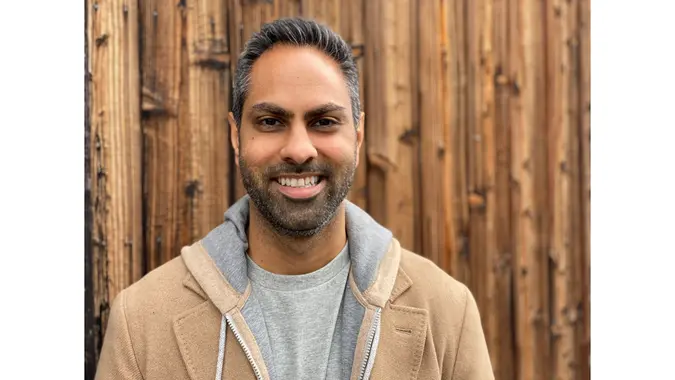
Chairman, Social Compact Board of Directors
President, First American Community Fund
Vide-President, Industry Relations & market Development
Mr. Savage has been in the mortgage industry for 16 years. He is employed by First American Corporation. He currently holds the position of Group Vice President - Emerging Markets and Industry Relations. He is the lead executive in Washington DC responsible for agency relations and he is responsible for strategic partnerships with Lenders, Real Estate Companies, Community Development Organizations and Non-Profits to further the company’s Emerging Markets strategy. He has held this current position since August 2003.
Mr. Savage was previously employed at Fannie Mae. During his 15 year tenure at Fannie Mae, Mr. Savage performed many roles to include operations consulting, small lender strategy, technology marketing and Customer Technology Support. He was a vital contributor in each of those areas. Mr. Savage currently sits on the Board of Directors of Residential Mortgage Corporation and LendersOne- A Mortgage Banking Cooperative.
Mr. Savage is actively involved with a number of programs for the children in his community. He volunteers as a youth leader with Youth Against Peer Pressure, a ministry of From The Heart Church Ministries of Temple Hills, Md. He is a financial literacy instructor at a local High School in Temple Hills, MD. He also participates in weekly youth mentoring activities and contributes his efforts to an annual week-long Youth Institute Retreat. He lives with his wife Donna and they have 3 children, Brit’ne, Brandon and Briana.

Vice Chancellor and CFO, Antioch University
Pari Sabety was appointed Vice Chancellor and CFO of Antioch University in 2011. She comes to Antioch from her most recent experience as the CFO and Cabinet member for Governor Ted Strickland, State of Ohio from 2007 to 2011, managing a state budget of $56 billion and a department of 200 professionals. Pari served as the senior fiscal leader and primary public face as the Administration guided the state through the worst recession in 50 years.
Ms. Sabety’s interests are at the nexus of finance and information technology. Her work in establishing Ohio Shared Services has been featured in business cases for Harvard and Gartner, won the 2010 President’s Award for Innovation from the National Association of State Auditors, Comptrollers and Treasurers and was featured for the 2010 Oracle Titan Award. In 2008, Pari’s leadership was recognized by Government Technology Magazine as one of the “Top 25 Doers and Dreamers” in deploying Ohio’s extensive ERP platform.
Ms. Sabety founded and directed the Urban Markets Initiative for the Center on Urban and Metropolitan Policy at the Brookings Institution. She also directed the Technology Policy Group, an initiative of the Ohio Supercomputer Center at The Ohio State University, which focused on the emerging challenges and barriers to widespread adoption of high-performance computing and networking capabilities nationwide.
Pari began her career in public accounting for Arthur Andersen, then moved into public service for Ohio Governor Richard F. Celeste. They partnered to operate a consulting firm, Celeste and Sabety, which focused on technology-driven economic development strategies for regions throughout the US.
Pari obtained her BA in History from Bryn Mawr College and her MA in Business Administration from Rutgers University School of Business and a Masters of Foreign Service, Concentration in Arab Studies (with distinction) from Georgetown University.
Pari is a member of the Board of Directors for Policy Matters Ohio and serves on the Advisory Board for The Urban Child Institute in Memphis, Tennessee.
Vice Chairman, CoreLogic
Prior to joining CoreLogic, Joe was Chairman of Strategic Mortgage Service, Newport Beach, California and has had a long career in real estate insurance and banking business. He was with PMI Mortgage Insurance Company located in San Francisco, California from 1990 - 1993 and from 1978 to 1990 was President of Amerifirst Mortgage Corporation in Florida, which was at the time, the largest mortgage banking company in the southeastern United States.
Before entering the mortgage banking business Joe served on the U.S. Senate staff of United States Senator, Bob Dole in Washington, D.C. for several years and was an Office Director of the Home Loan Bank Board in Washington.
Joe is currently the Chairman of the Board of Trustees of the Washington, D.C. based Social Compact , served on the Board of Directors of the Mortgage Bankers Association of America and was the Chairman of MORPAC, their political action committee. Joe has been Chairman of the Fannie Mae Advisory Council and Chairman of the U.S. League Secondary Market Committee.
Joe graduated from Kansas State University in 1966 and received a master’s degree from the same university, where he served on the journalism faculty for two years. He has served as an officer of the United States Naval Reserve. Joe currently lives with his wife, Colleen, in St. Petersburg, Florida.

Founder and Vice Chairman of the Board of Trustees, Social Compact Board of Directors
Mary Lee Widener was President and Chief Executive Officer of Neighborhood Housing Services of America (NHSA). She co-founded NHSA and led its growth from a $250,000 pilot in 1974 to a social investment conduit of more than $1.5 billion that has provided neighborhood revitalization and homeownership opportunities to hundreds of communities around the country. NHSA purchases nonstandard loans from affiliated community development organizations and their lending partners, and then sells notes backed by the loans and credit enhancements to socially responsive institutional investors.
Ms. Widener currently serves on the board of directors of the PMI Group, the First American Corporation, the S.H. Cowell Foundation, and Operation HOPE, Inc. She is also a member of the board of trustees for the National Housing Conference, a Trustee Emeritus of both the San Francisco Foundation and Partners for Livable Communities, and is a member of the Fannie Mae Advisory Council.
Past professional activities include serving as chairman and director of the Federal Home Loan Bank of San Francisco and chairman of the of the Federal Home Loan Bank of San Francisco’s affordable housing advisory council. She also participated on the U.S. Senate’s National Housing Task Force and in the International Exchange of Housing Professionals sponsored by the Ford Foundation.

Treasurer, Social Compact Board of Directors
JoAnn Kane is a nationally recognized social justice advocate and expert in community investment programs to revitalize low income neighborhoods. Ms. Kane has worked throughout the United States to assist organizations led by women to build ten thousand affordable housing units and to increase the impact of the innovative grassroots institutions they lead. In support of this mission, Ms. Kane secured over $40 million in loans and grants to fund hundreds of successful nonprofit development initiatives in underserved communities and develop a new generation of community leaders.
Ms. Kane’s career in neighborhood development started in Baltimore, Maryland. She was a member of the staff of the Department of Housing and Community Development that launched the highly successful $1 House/Urban Homesteading Program. She assisted hundreds of “homesteaders” to secure financing to purchase and rehabilitate homes throughout the City and became the project manager for The Otterbein, a concentrated site of 200 new and rehabilitated homes. The award-winning project was the housing anchor of the redevelopment of Baltimore’s Inner Harbor.
Building on her experience in Baltimore, Ms. Kane joined the national program staff of Neighborworks America. During her four-year tenure, she traveled extensively across the country to identify and fund the expansion of unique community development models including urban lending consortia; energy conservation; and alternative micro finance strategies. The rich combination of travel to diverse communities and the opportunity to work with creative local leaders formed the basis of a national career in support of affordable housing and economic justice.
Ms. Kane was appointed the President and Chief Executive Officer of The McAuley Institute in 1984. For nineteen years, she led the national, nonprofit community development organization in its growth from start-up to its position as a preeminent organization serving low-income women leaders. She directed the delivery of technical and financial services to 2,500 nonprofits and faith-based organizations in 48 states and the District of Columbia. Under her leadership, the Institute’s loan fund grew from an initial capitalization of $200,000 to $15 million. Those funds were recycled many times resulting in over $200 million in local housing development projects in some of the most underserved communities in the nation.
Ms. Kane has contributed to the strengthening of the community development field as the founding director of The National Community Reinvestment Coalition, the America Works Partnership, the Coalition for Low Income Community Development, and The Interfaith Funders Group. She has consistently been recognized for her leadership on a wide range of national boards serving as the Chairperson of the National Neighborhood Coalition; the Treasurer of The Social Compact; the Executive Committee of the National Low Income Housing Coalition; as the Chair of HUD’s Homeownership Opportunities for Women; and as Secretary of the Board for Homes for America.
Ms. Kane’s lead a consulting firm providing faith-based institutions, grassroots women’s organizations, and community development corporations with a wide range of planning and business tools adapted to meet the needs of nonprofit mission and programs. The firm specializes in holistic approaches that strengthen impact and organizational sustainability through the development of affordable housing, strategic policy and organizing strategies, custom research and analysis, and creative deployment of real estate assets. Clients have included Oxfam America, The Women’s Community Revitalization Project, Wider Opportunities for Women, Faithworks, Southern Mutual Help Association, homeWORD and Global Action for Children.
Her professional recognitions include the Women of Justice award from NETWORK, A Catholic Social Justice Lobby and the David Aschiem Friend of Housing Award. She was awarded an Honorary Doctorate of Humane Letters from Georgian Court College in 2001. In 2008, Dominican University awarded Ms. Kane the Caritas-Veritas Award.
Secretary, Social Compact Board of Directors
Michael McGuire led Affinity Bank as its President and Chief Executive Officer from 1996 to 2009. Previously, he served as President at three other financial institutions in a career spanning more than thirty years in the banking and mortgage banking industries.
Mr. McGuire’s experience includes the oversight and management of residential and income property mortgage banking departments and has served as Treasurer of a $2 billion California bank. He has also held various positions in several trade associations including Chairman of the California Association of Industrial Banks, Chairman of the Colorado League of Savings Institutions and director of the Western League of Savings Institutions.
Equally involved in housing and economic development on a local and national level, he currently serves as Board President of the Cabrillo Economic Development Corporation, Ventura County’s leading non-profit builder of affordable housing, and as a director of Social Impact, a catalyst for new economic development in the emerging markets of America’s inner-city neighborhoods.
A leading authority on affordable housing finance, Mr. McGuire oriented Affinity Bank’s multifamily lending programs to encourage the preservation and rehabilitation of existing rental property housing.

Global Marketing Director, SAS
Clark Abrahams is Chief Financial Architect at SAS, where his responsibilities span R&D, marketing, and sales. Inventor, author, and former bank executive, he pioneered a revolutionary approach for lending based upon thirty years of experience as a banker and senior risk manager. In 2008, prior to the financial market meltdown, Abrahams testified about the need for a better consumer lending approach before a House of Representatives Financial Services Subcommittee. Over the past two years, Abrahams and his co-author Mingyuan Zhang have written two books: Fair Lending Compliance –Intelligence and Implications for Credit Risk Management (2008), and Credit Risk Assessment – The New Lending System for Borrowers, Lenders, and Investors (2009), both published by John Wiley & Sons. A San Francisco native, Abrahams is a graduate of UC Berkeley and Stanford University. From January 2007 through June 2008, he served on the Advisory Board of the Metropolitan Program’s Urban Markets Initiative at The Brookings Institution. Abrahams is a member of the CFA Institute, Risk Management Association, North Carolina Society of Financial Analysts, Global Association of Risk Professionals, and Professional Risk Managers’ International Association.

Chair, Audit Committee, Social Compact Board of Directors
Senior Manager, Deloitte Services LP
Bonnie is Deloitte’s Strategic Relationship Manager for the Citigroup Client Services Team. She has significant experience in managing enterprise technology programs with large, global organizations; primarily within the financial services segment. She brings solid understanding of the financial services industry and information management/technology architecture for supporting risk management, marketing, and sales.
Prior to joining Deloitte, Bonnie was the Global Client Executive for SAS, was responsible for the overall SAS at Citi global relationship, SAS’ largest commercial client. Bonnie led a team of account managers in the US, EMEA, and AP focused on sales growth activities. She was also responsible for developing and managing several strategic initiatives between SAS and Citi, including the Social Compact/Citi alliance.
Bonnie has over 20 years business development and global account management experience primarily within the financial services industry. She has an MBA in Finance from NY Institute of Technology, and an undergraduate degree in Economics and Political Science from Brooklyn College (Early in her career she held an internship position with a NYC based community development organization conducting land use surveys throughout Brooklyn, NY).

President, Social Compact Board of Directors
Senior Vice President, Community Development Banking, PNC Bank
A Cincinnati native, Peg has worked for over 25 years in Community Development to revitalize urban neighborhoods. In fact, she got her start in 1977 as a lead staff and then acting director of the National Federation of Housing Counselors, at the birth of the Community Reinvestment Act. Now a senior vice president with PNC Bank, Peg is responsible for Community Development Banking in Ohio, Kentucky and Indiana, overseeing innovative loans, investments, grants and service leadership aimed primarily at the inner city hearts of our region.
Peg was previously the director of the City of Cincinnati Department of Community Development and Planning, supervising housing, economic and workforce development, neighborhood and small business, planning, contract compliance and human services.
Between 1977-2001, when she began her public service, Peg was an award-winning community development banker, director of an organization of women business owners, and senior small business executive. Peg is a recognized civic leader with service on many boards and committees, currently including Social Compact’s national board, Greater Ohio, Place Matters, LISC Local Advisory Board, Cincinnati Development Fund, Urban Land Institute Cincinnati District Executive Council, Urban League of Greater Cincinnati, the Continuum of Care for the Homeless, Center for Holocaust and Humanity Education and GO Cincinnati. A particular challenge at the moment it leading the Homeless to Homes initiative, the CoC’s charge from Cincinnati City Council to develop a first-class plan for comprehensive facilities and services for homeless individuals.
Among other achievements, Peg was a Cincinnati Leading Woman, Cincinnati Business Courier Forty Under 40 honoree, a Community Action Agency Community Bridge Builder, a Fannie Mae Fellow and graduate of the Program for Senior Executives in State and Local Government at Harvard’s JFK School, and a member of Leadership Cincinnati Class XXIII. In May 2009, she will be recognized by the Cincinnati Human Relations Commission as a Champion Connecting Cultures and Communities.
Peg lives in Cincinnati with her son Nick, a Walnut Hills High School senior.

President and CEO, Federal Home Loan Bank of San Francisco
Dean Schultz is President and Chief Executive Officer of the Federal Home Loan Bank of San Francisco. Mr. Schultz became President and Chief Executive Officer in April 1991.
Mr. Schultz is a member of the Board of Directors of the Office of Finance, which issues and services debt for the Federal Home Loan Banks. He was appointed to the Board on March 12, 2008, for a three-year term ending March 11, 2011. He is also a member of the Board of Directors of Social Compact, an organization dedicated to increasing business leadership for and investment in lower-income communities.
Prior to joining the Bank, Mr. Schultz was Executive Vice President of the Federal Home Loan Bank of New York, where he had also served as Senior Vice President and General Counsel. From 1980 to 1984, he was Senior Vice President and General Counsel with First Federal Savings and Loan Association of Rochester, New York. He previously was a partner in a Rochester law firm. Mr. Schultz earned a B.A. at Colgate University and holds a J.D. from the Georgetown University Law Center.

Former President, Corelogic
Karen J. Collins has been a driving force in the corporate culture and overall success of CoreLogic since she joined the company in its previous form in 1988. Collins responsibilities have included leadership of the Foundation, a focused philanthropic effort to increase homeownership within America’s under-served communities.
Under her management the company has actively forged an enterprise-wide cultural diversity and inclusion strategy. The cultural diversity strategy is designed specifically to foster an environment where all people are valued, challenged to think as leaders and are engaged for their diverse viewpoints, experiences, talents and ideas.
Prior to her current positions, Collins managed senior-level strategic sales professionals and served as a senior strategist leading the direction of the Client Relations division. She served as senior vice president and director of sales for strategic accounts, providing focus to First American’s sales organization, which serves mortgage lending and servicing organizations, and spans many of the company’s key business segments.
Collins frequently speaks on leadership panels around the country and serves on various Boards and Advisory Councils to include the Board of Trustees at North Carolina A&T State University and the American Stroke Association Advisory Committee. She is also a recipient of the National Eagle Leadership Institute’s CareerFOCUS Eagle Award which is presented annually to a select group of African American and Latino executives who embody excellence in both corporate and community leadership.
Social Compact, Inc., a national non-profit organization, has created the Social Compact Investment Fund (SCIF) to support the development of supermarket-anchored retail projects in underserved marketplaces. These investments will bring new grocery stores into markets that the traditional, national supermarket and grocery store chains have long overlooked. The stores supported by SCIF investments will offer high-quality general merchandise, seasonal goods and everyday consumables at very competitive prices, in addition to USDA-inspected beef, pork and poultry, farm-fresh fruits and vegetables.
April is almost here. It is a month for pouring rain, playing pranks, painting eggs, and paying taxes. But since this is a year ending in zero that means it’s also time for one more thing, filling out your Census.
It costs no money and takes a trifling amount of time, but it helps to determine how well represented your community is in government, how over $400 billion in federal funding gets divided, and how big of a market your community represents to businesses and organizations looking to expand.
Social Compact has assisted cities with programs to correct and challenge undercounts of their populations by conventional metrics. Last year alone Social Compact assisted twelve…
Social Compact announced today the launch of its Washington, DC-based ‘CityDNA,’ a new easy-to-use web-based system that will serve as a one-stop-shop for visualizing and analyzing local market data. CityDNA aims to help local governments, investors and community groups understand and respond to the unique market characteristics of their communities.
The 2010 U.S. Census is fast approaching and, according to this story from NPR’s Morning Edition, the recession will make it even harder for the government to make an accurate count. The decennial count directly impacts the yearly allocation of more than $200 billion in federal funding to states, cities, and municipalities. Unfortunately, many people affected by foreclosures or job loss are in transitory living arrangements and are harder than ever to track down. Furthermore, Labor Department data show that traditionally harder-to-count minority groups, such as Latinos and African Americans,…
Washington, D.C., May 16, 2011—Social Compact, a national non-profit organization that helps underserved urban areas develop accurate economic data needed to attract investment, announced today that Alyssa Stewart Lee has been selected as the organization’s chief executive officer (CEO).
With the exception of the U.S. Census Bureau, Social Compact is the only organization that conducts original demographic research in major cities across the U.S. Social Compact’s research often identifies Census under-reporting issues and quantifies the purchasing power and stability of urban and micro-markets to support community development and investment. To date,…
Social Compact and Detroit Economic Growth Corporation’s 2009 DrillDown Report for Detroit will serve as a foundation for comprehensive economic development strategic planning for the City of Detroit through 2012.
(DETROIT, MI, February 23) - In the face of the national recession, many of Detroit’s neighborhoods are continuing to show strong market strength for retail and other economic investment. The Social Compact 2009 DrillDown Report shows that while Detroit experienced an overall population loss, many neighborhoods remained stable or had grown slightly since the 2000 U.S. Census report. In anticipating a Census 2010 undercount, this information has allowed Detroit…
WASHINGTON, Mar 11, 2010 (BUSINESS WIRE)—Social Compact announced today the launch of its Washington, DC-based ‘CityDNA,’ a new easy-to-use web-based system that will serve as a one-stop-shop for visualizing and analyzing local market data. CityDNA aims to help local governments, investors and community groups understand and respond to the unique market characteristics of their communities.
CityDNA is made possible through support from the Citi Foundation and marks a giant leap forward in the technical capacity available to stakeholders working toward sustainable community development in the District. “The Citi Foundation’s support of Social Compact’s…
More than 1,200 jobs and 30 new business have been created in Columbia Heights since 2002, the result of a public-private partnership that has helped transform a struggling inner-city community into a thriving neighborhood. And an additional 30,000 square feet of retail development is in the pipeline. These figures were reported by Social Compact, a coalition of business leaders from across the country who are promoting successful business investment in lower-income communities for the benefit of current residents.